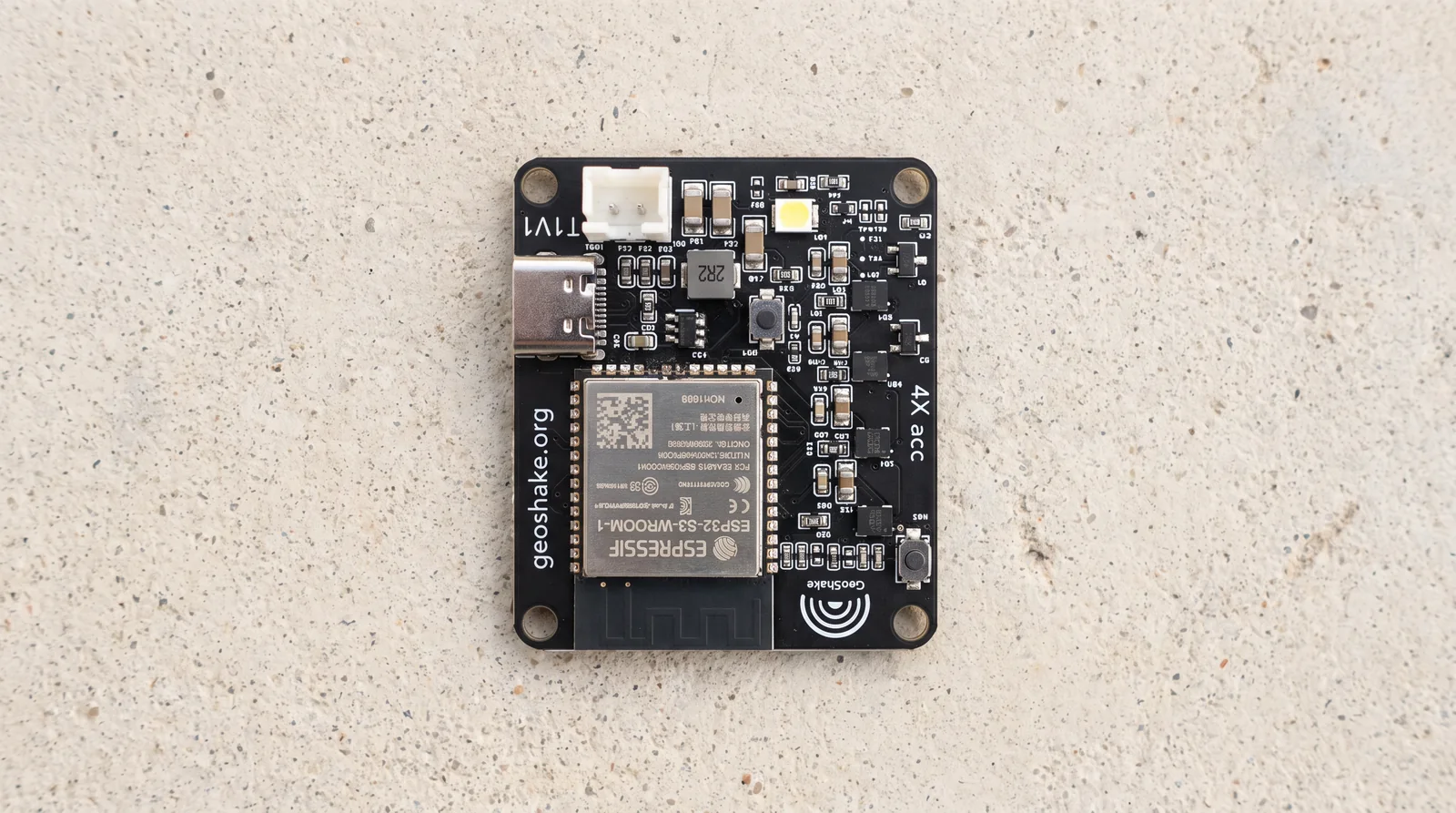
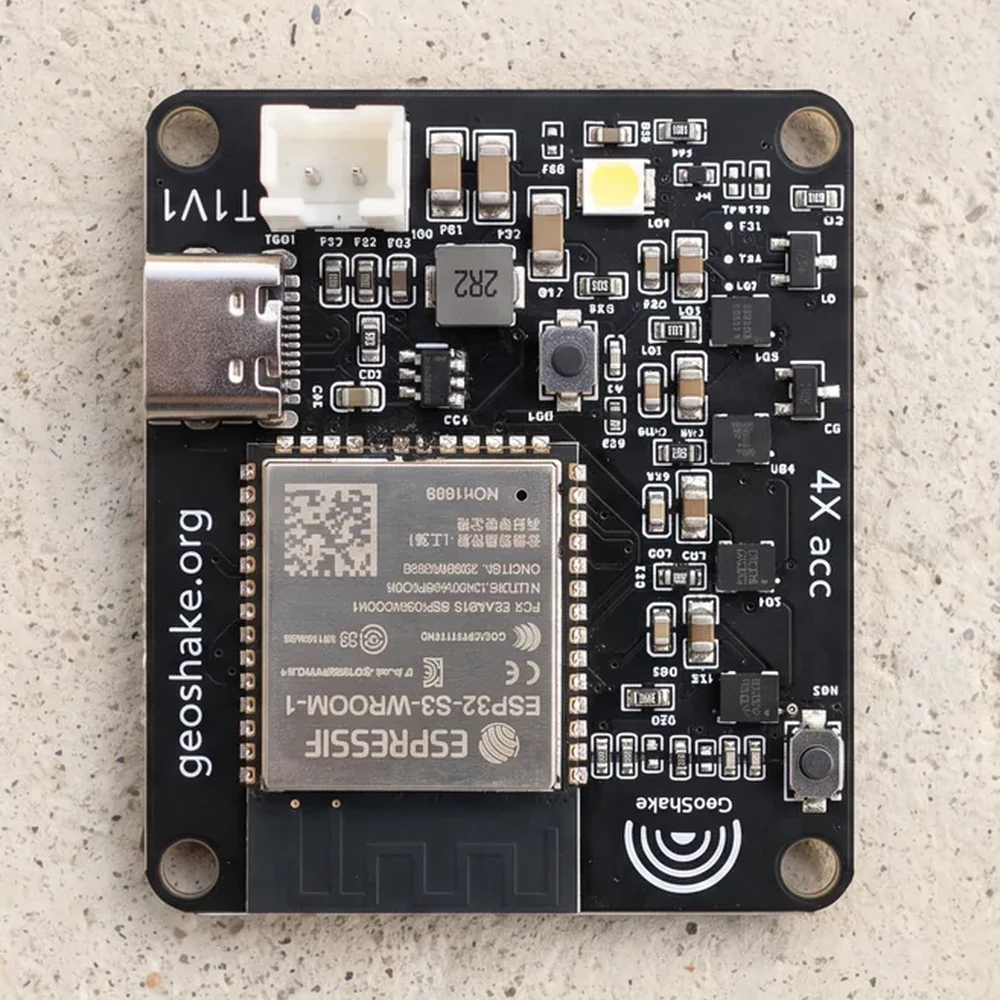
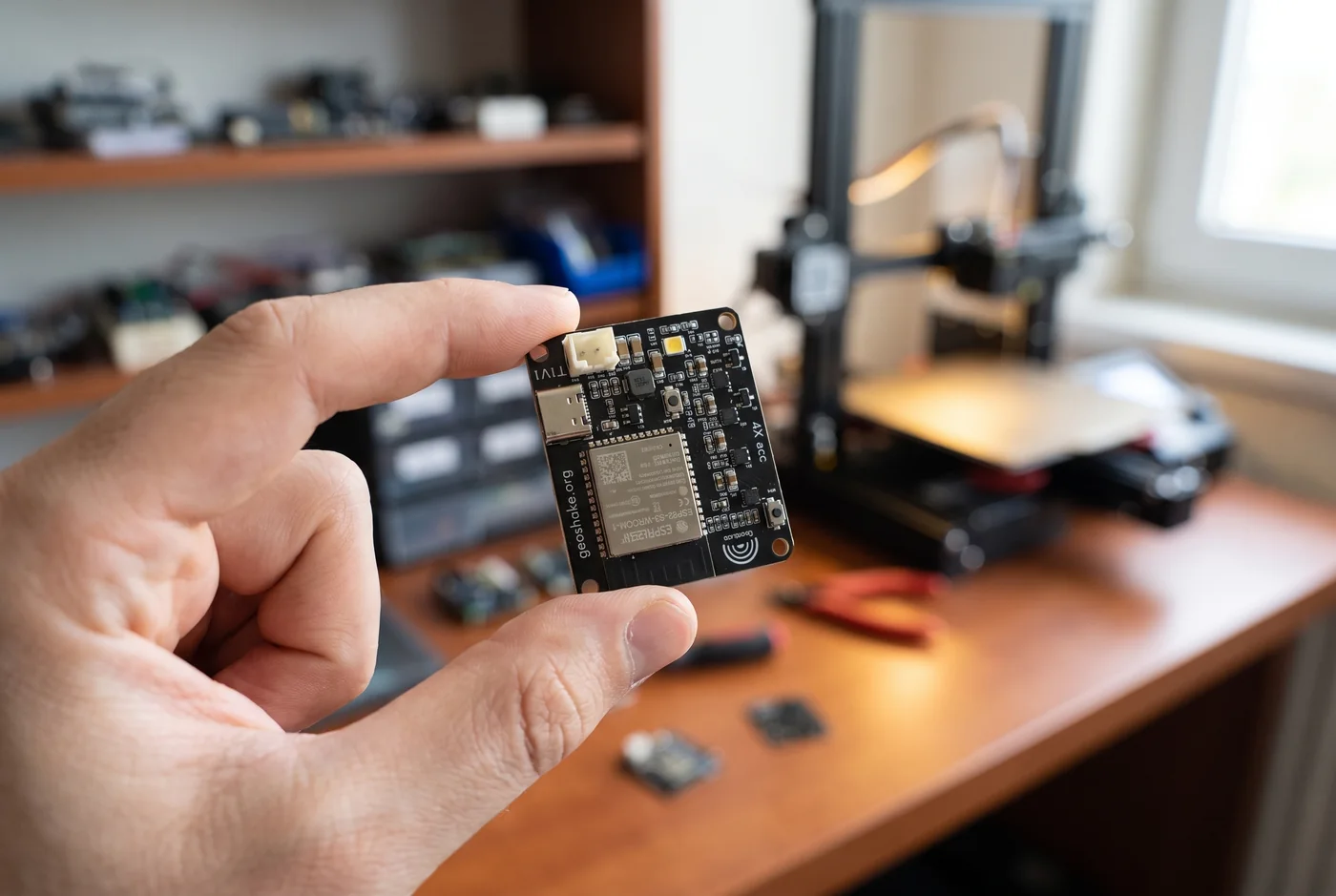
Just the board.
The same seismic electronics that go into every GeoShake T1: an ESP32-S3 with a four-sensor LSM6DSO array, reading the ground more than a hundred times a second. Assembled, tested, firmware already on it. Everything around it is yours to build.
Three ways to get one
Same electronics in all three. What changes is how much of the work is yours, and who is there when something does not work.
| Option |
 This page
Maker Edition
Bare board, single
This page
Maker Edition
Bare board, single
|
 Complete unit
GeoShake T1
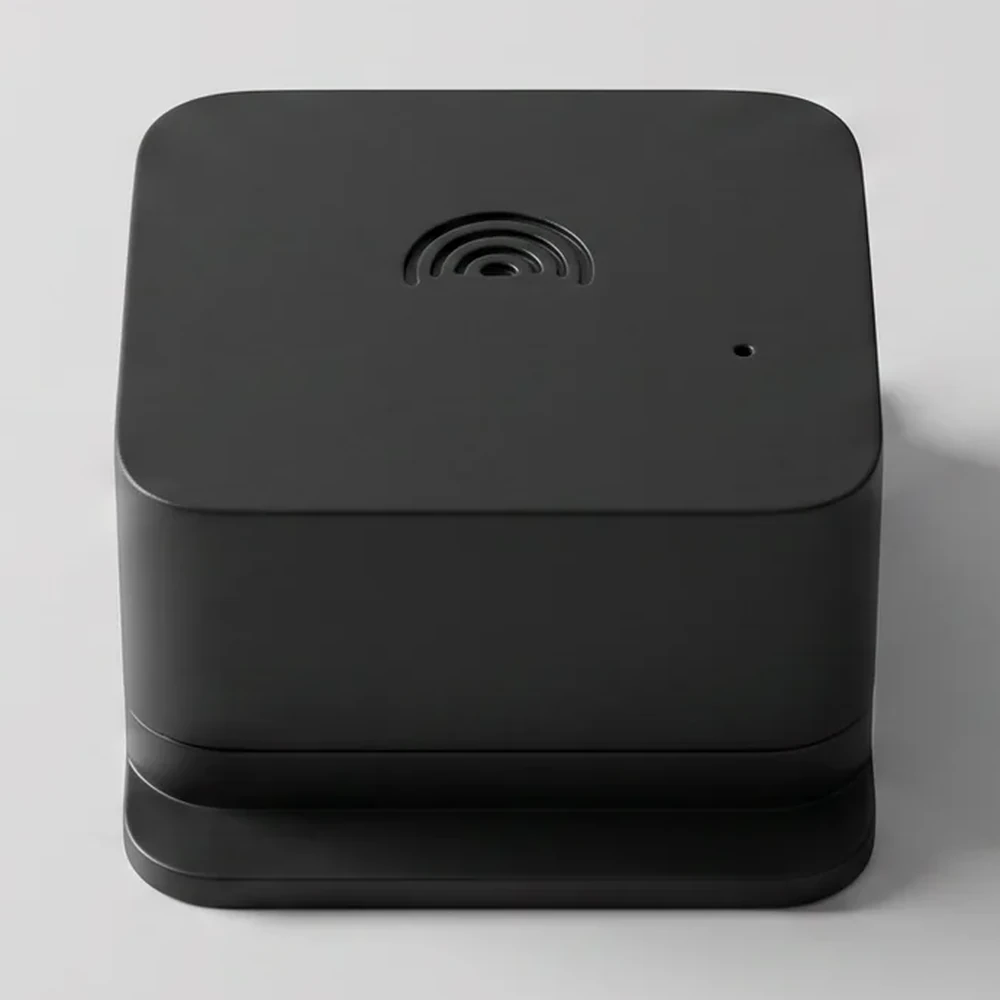
Ready out of the box, single
€199
See the T1
Complete unit
GeoShake T1
Ready out of the box, single
€199
See the T1
|
 For a region
Sponsor a region
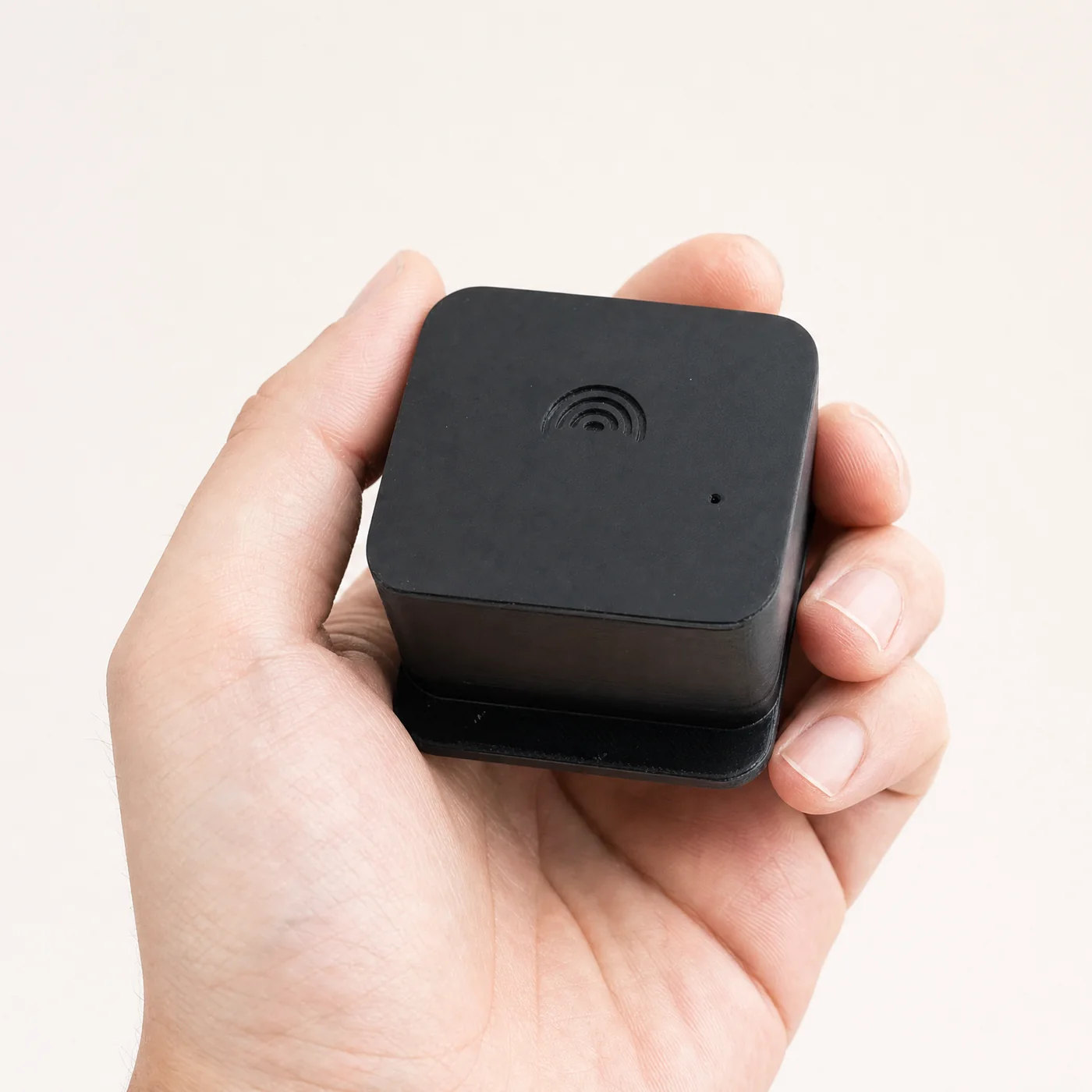
Complete units, minimum 12
€129 per node
See the packs
For a region
Sponsor a region
Complete units, minimum 12
€129 per node
See the packs
|
|---|---|---|---|
| Enclosure | You print it. Files are open, CC BY-SA 4.0 | Included | Included |
| In the box | The board and the Station Passport. Nothing else | Unit, 1 m USB-C cable, mounting kit, Station Passport | Complete units, shipped to the local partner |
| Shipping | Standard post, free worldwide | Express courier (DHL, UPS or similar), free worldwide | Express courier to the local partner |
| Who is there afterwards | The community on Discord, and us by email | Live support | Local partners on the ground, a quarterly coverage report for you |
| If it arrives dead | Replaced | Replaced. 1-year warranty, EU consumers 2-year legal guarantee | Replaced, same unit as the T1 |
| Where it lives | Your desk, a wall or a solid floor | Your home | Schools and communities on active faults |
| Minimum | 1 | 1 | 12 nodes, the School pack at €1,548 |
| Free apps |


The GeoShake app is free on iOS and Android. Same for all three. | ||
| Deep analysis tool |
GeoShake Scope opens every earthquake the network records as waveforms and spectrograms. Free and open source, on Windows, macOS and Linux. Same for all three. | ||
| Works with |
Every station works with Smart Life, Home Assistant and Tuya. Same for all three. | ||
What arrives, and what does not
In the box
- The assembled, tested GeoShake T1 board
- Station Passport: setup, mounting and light guide
- Firmware pre-loaded
- Nothing else
You supply
- The enclosure. Files are open, print the v2.1 set in ASA
- A USB-C cable and power source
- A little M3 hardware, plus two plugs and screws to fix it to a wall or floor (full list)
- The setup, using the same first setup guide as everyone else
- Your own patience when something needs figuring out
No soldering. The board is fully assembled and tested before it ships. The "maker" part is the enclosure and the setup, not the electronics.
One step is worth doing properly: screw the mounting base to a wall or a solid floor. A sensor measures whatever it is coupled to, so a station left standing loose records the furniture rather than the ground.
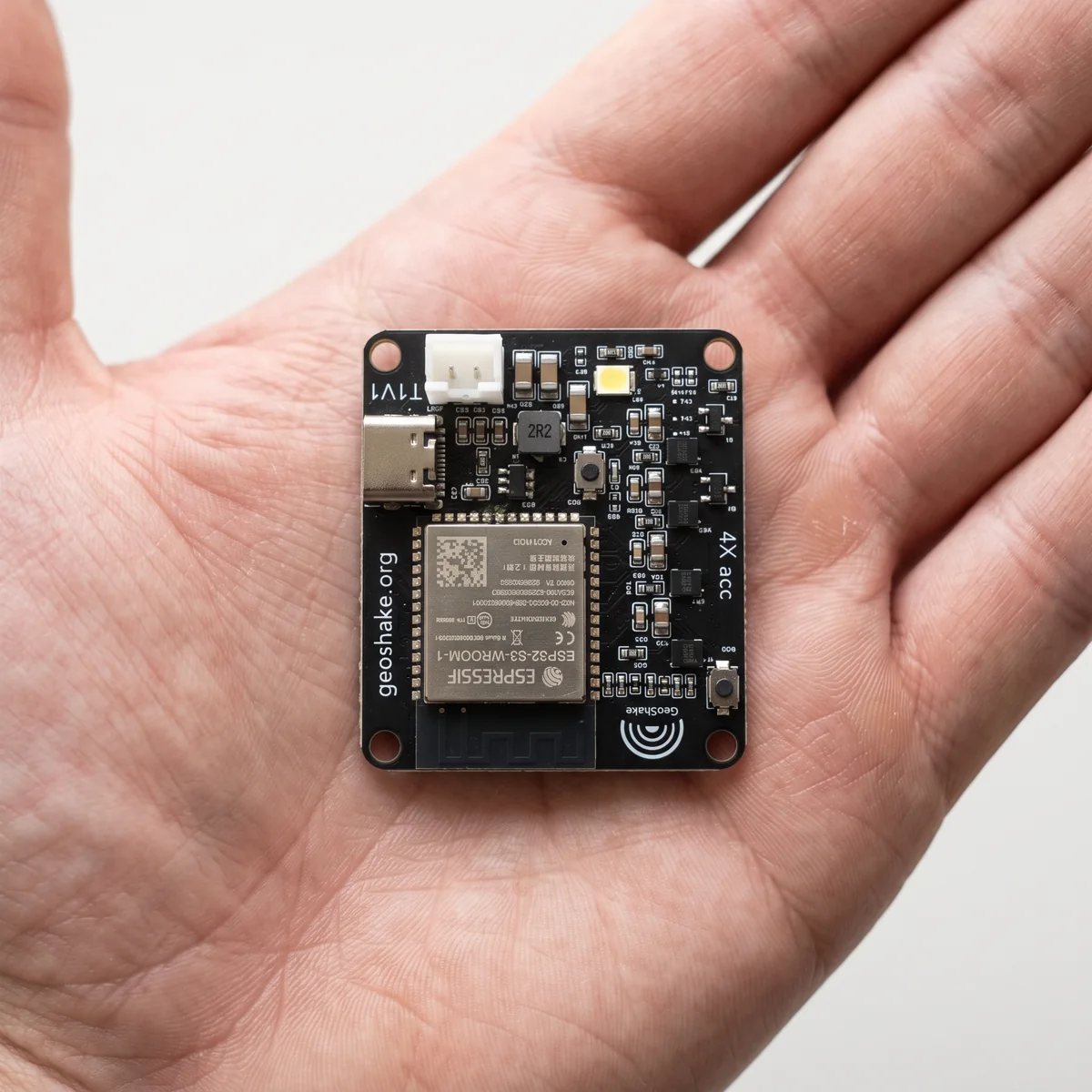
On the network from day one
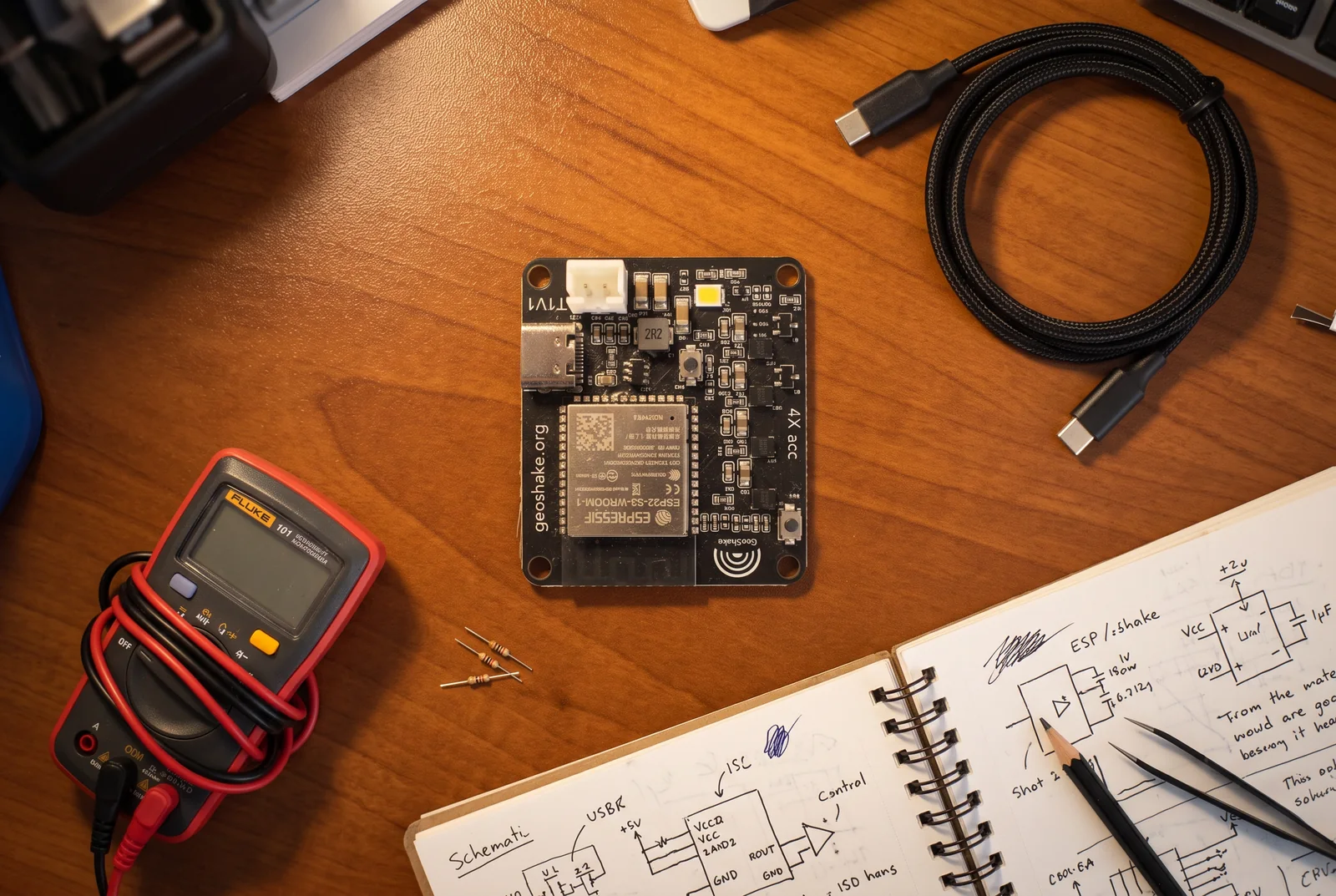
The firmware and the station identity are already on the board. Set it up with the app and it appears on the map like any T1.
Every station on the map carries an identity we issue, and that is what lets the network trust a reading enough to act on it. Yours arrives with that identity, so there is nothing to apply for. The firmware is GPL-3.0 and you are free to build and flash your own, but a self-compiled board cannot join without an issued identity, and that is by design.
Building your own board from the open files instead? Then Join the network is the door, and we review those applications by hand.
Buy the Maker Edition
€129 €99 each, shipping and taxes included, delivered worldwide.
Where you get help
Community, not a support desk. That is the honest difference between this and the €199 unit.
- Discord: other owners and the team. This is your first stop.
- First setup guide: the same guide the complete unit ships with, LED meanings and troubleshooting included.
- GitHub: firmware source, enclosure files, and where to open an issue.
Faults are still faults. If a board arrives dead or fails its self-check, email info@geoshake.org and we will replace it. Community support is about setup help, not about you being stuck with broken hardware.
Before you order
Is the board really identical to the one in the €199 unit?
Yes. Same PCB, same ESP32-S3, same four LSM6DSO sensors, same firmware, assembled and tested on the same line. The difference is everything around it.
Do I need to solder anything?
No. Nothing on the board is soldered. It arrives fully assembled and tested. What you supply is the enclosure, its M3 hardware, a cable and the setup. If you use heat-set inserts you will want a soldering iron for those; the alternative nut method needs no heat.
Where do I get the enclosure files?
They are open under CC BY-SA 4.0. The current v2.1 set, the print settings and the hardware list are on GitHub. Printables and MakerWorld still carry the earlier Rev-C set. Print in ASA, gyroid infill: 15% for the lid, 99% for the base and the mounting base, no supports.
Can I keep it off the public network?
Yes. Point it at your own MQTT broker and it works: the firmware is open and no secure-boot eFuses are burned. It ships ready for the public map, so staying private is a choice you make at setup, not a requirement.
Can I buy several?
Up to 99 in one order, and you can adjust the quantity on the Stripe page. If you need more than that, or you are buying for a school or a lab, email info@geoshake.org.
Can I use it as a plain ESP32 earthquake sensor board with my own firmware?
Yes. It is an ESP32-S3 with four LSM6DSO accelerometers on one board, flashed over USB with the usual ESP-IDF toolchain. The firmware is GPL-3.0 on GitHub and no secure-boot eFuses are burned, so you can build and flash your own. The one thing self-built firmware cannot do is join the public network. That needs an identity we issue.