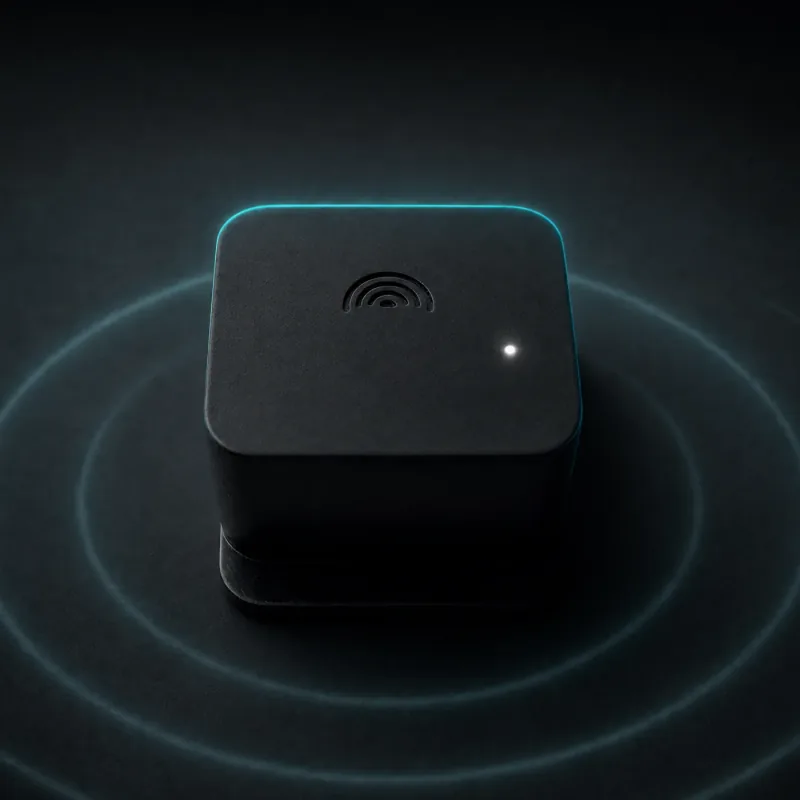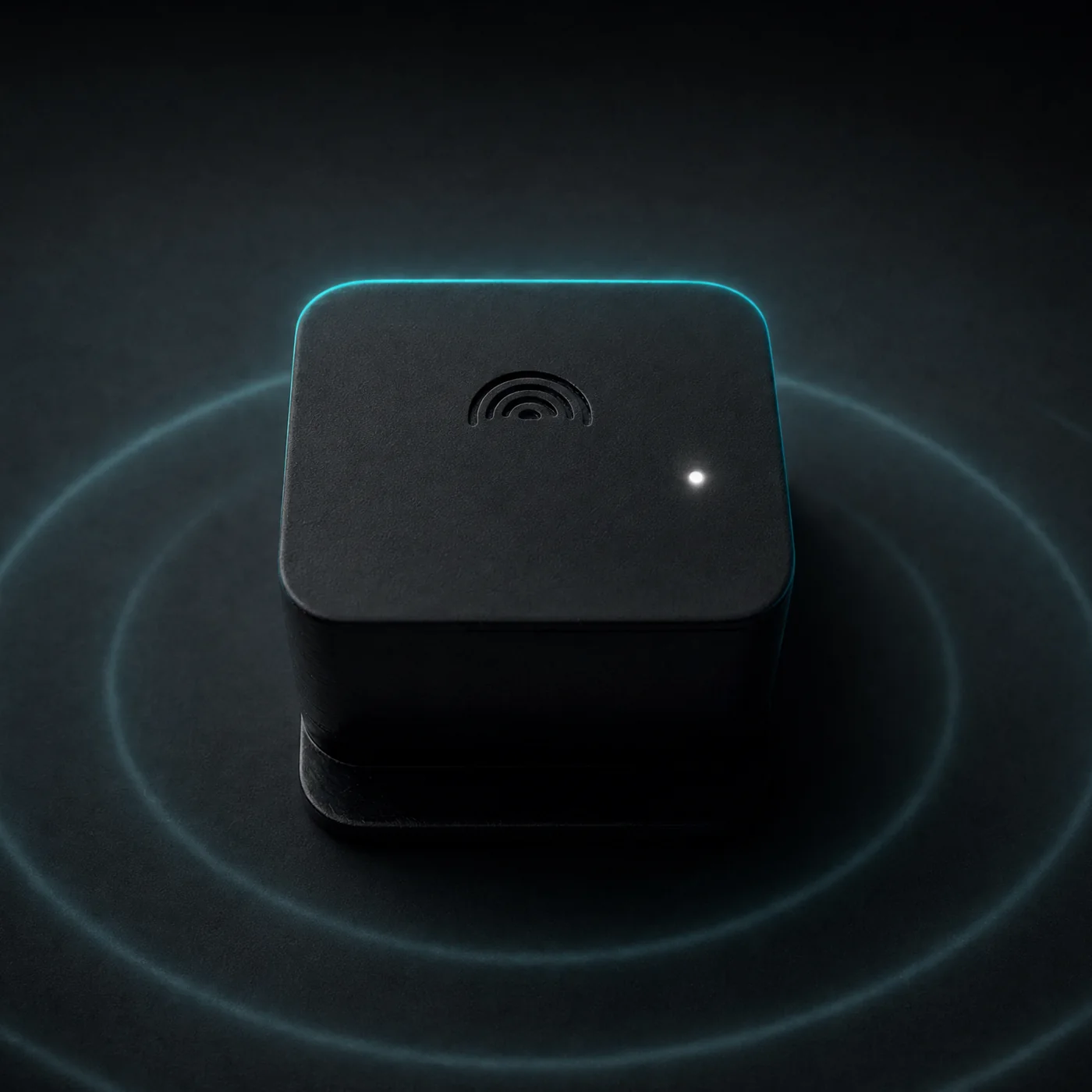


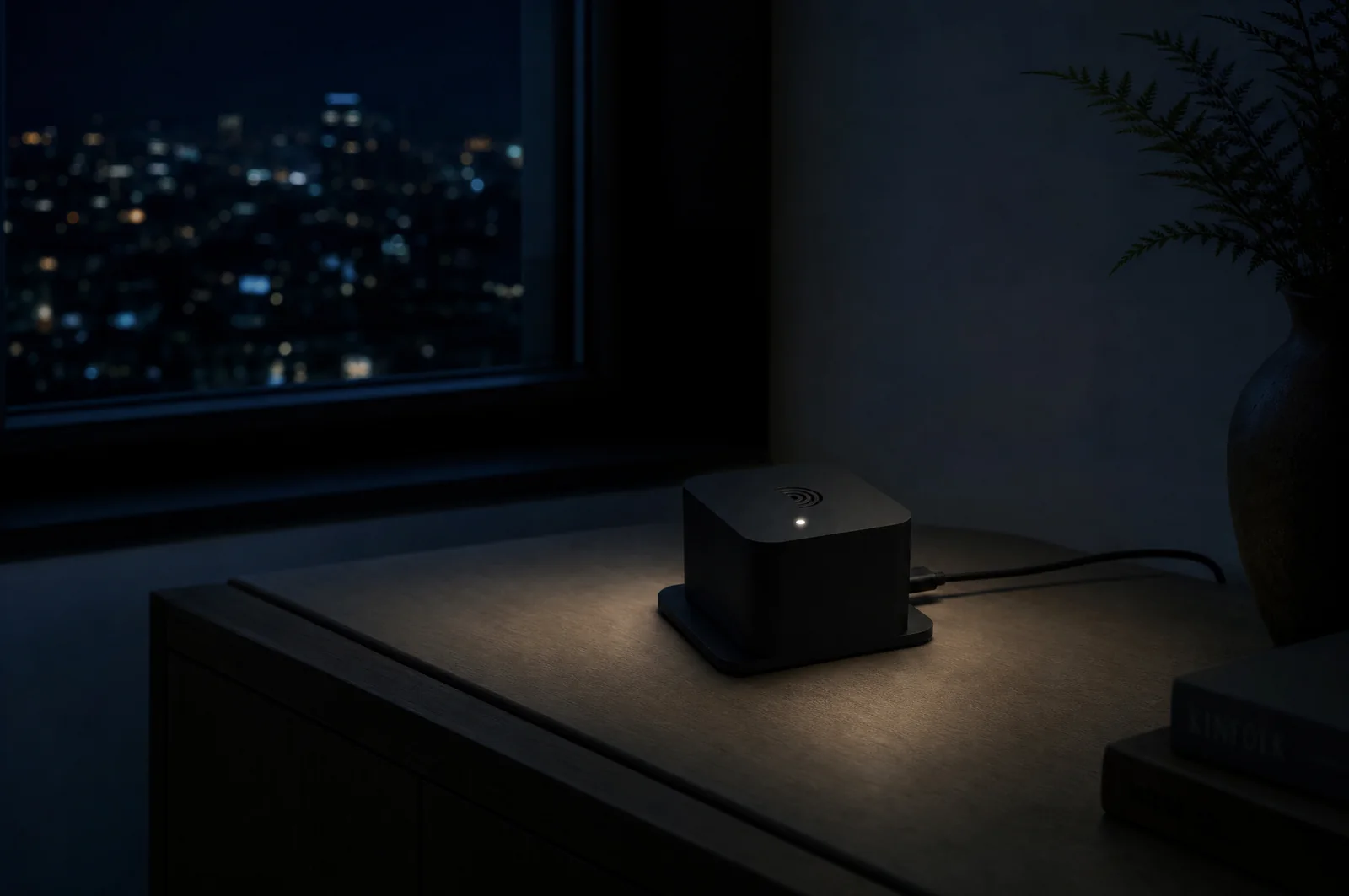
GeoShake T1
Just want the board? The Maker Edition is $99.99.
Those first seconds are yours.
Every earthquake sends a fast, harmless wave (P) ahead of the slow, destructive one (S). The T1 catches the P-wave the instant it arrives and warns you often 5 to 20 seconds before the shaking reaches your street.
- Drop, cover, and hold before it hits
- Alerts tuned to your home and radius
- Auto-reconnects the moment your connection returns
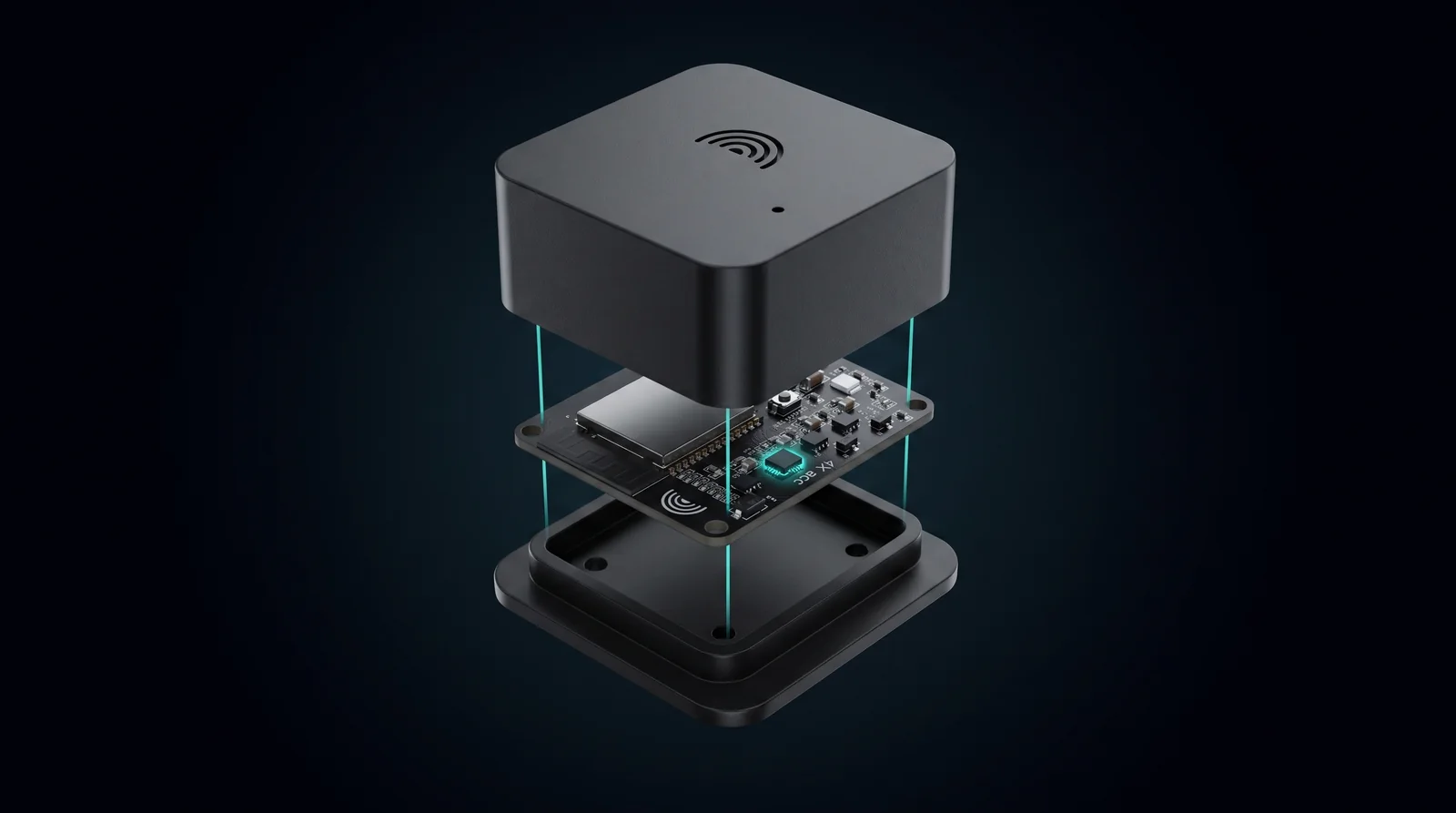
Serious hardware. Simple to live with.
A dual-core processor paired with an array of four industrial 6-axis IMUs reads the ground more than 100 times a second and streams over secure MQTT. No subscription, no cloud lock-in the firmware and enclosure designs are fully open.
- Plug in, connect with your phone live in 2 minutes
- Free over-the-air firmware updates forever
- Privacy-first: only acceleration data ever leaves the device
 1:42
1:42
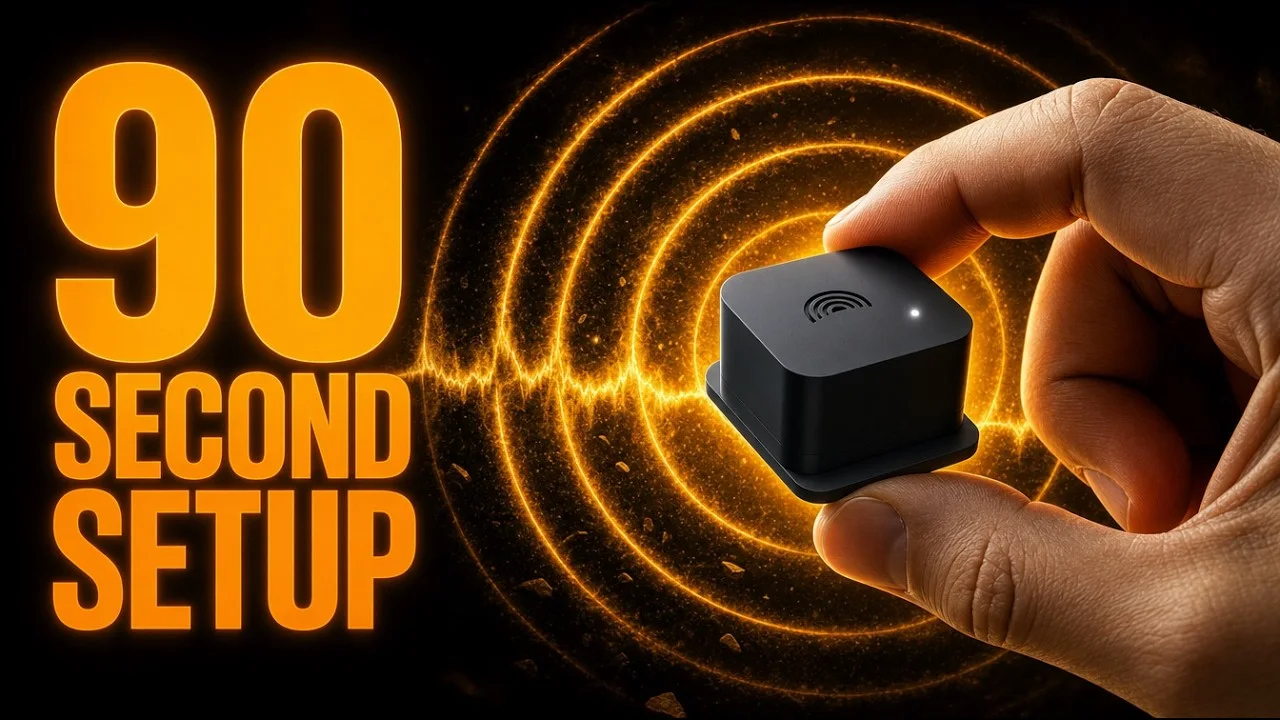
Set up in 90 seconds.
Unbox it, plug it into USB-C, connect Wi-Fi in the app and watch your dot appear on the live map. The whole setup, uncut.
Setup guide → Watch on YouTube ↗How a shake becomes an alert.
One device sensing something is a clue. Many devices agreeing is an earthquake.
Detects
Four accelerometers listen to the ground non-stop. A sudden jolt fires the on-device STA/LTA trigger the standard method in seismology within milliseconds.
Verifies
Your trigger is matched in the cloud with neighboring devices in space and time. Only an event that spreads at real seismic-wave speed across multiple homes counts a passing truck or a slammed door doesn't.
Shows
The verified event lands on the live map with its location and intensity wave spread and affected stations, in real time, right in your browser.
By design, a single device never raises the alarm alone. The decision comes from the shared physics of many devices that's what keeps false alarms out.
Your sensor doesn't protect only your home. It protects everyone connected to the network.

Your home is now on the network.
When the GeoShake network confirms an earthquake within 300 km of your T1, your home hears it: lights on, a spoken announcement, a scene of your choice. Certified for Google Home, available as an Alexa skill (amazon.com), native in Home Assistant, direct in Smart Life.
Google Home, certified
Link your GeoShake account in the Google Home app. An Earthquake sensor appears; build a routine that starts when it turns on. No hub.
Amazon Alexa
Enable the GeoShake skill in the Alexa app: a network-confirmed earthquake starts your Alexa routine. For now, amazon.com accounts, in English. Set it up →
Home Assistant
Native integration via HACS, version 0.3.0, with a 300 km radius from your home location. Mirror it into Apple Home through the HomeKit Bridge.

Smart Life & Tuya
In Central Europe, no hub needed: scan one code and the T1 appears in Smart Life, ready for Tap-to-Run scenes.
Smart-home automations are an extra notification layer, not a life-safety system. Always rely on official warnings and the GeoShake app alert first.
A real seismograph under the hood.
In normal operation the T1 sends only a compact summary trigger time and peak acceleration. Switch on Science Mode and it records the full raw waveform: all three axes at ~110 Hz, full resolution.
- Inspect P and S wave arrivals, amplitude and duration on real recordings
- Open analysis toolkit process the data with Python (numpy, scipy, matplotlib)
- Made for classrooms, universities, clubs and curious minds
Equipping a school or a whole region? Sponsor a region →
Details
Everything else about the T1 the numbers, what ships in the box, and the questions we hear most.
Technical specifications
Sensing
Compute
Connectivity
Power & body
What's in the box
Before you buy
How many seconds of warning will I get?
It depends on your distance from the epicenter. Right on top of it, warning is minimal — but for the far more common case where the epicenter is tens of kilometers away, you typically get 5 to 20 seconds. Enough to drop, cover, and hold.
Does it predict earthquakes before they start?
No — and we want to be clear about that. GeoShake detects and verifies shaking the moment it begins; it is not a crystal ball. It complements official early-warning authorities such as AFAD and Kandilli — it does not replace them.
How many sensors does my area need?
More than one, and the reason is worth knowing before you buy. GeoShake publishes an earthquake only when at least three stations agree on it — below three, the shaking is recorded but no event is located. A single T1 still protects your own home and feeds the network, but it cannot put an event on the map by itself. If you are planning coverage for a town, a school district or a region, the coverage planner lets you place sensors on a map and replay real earthquakes that have already happened there, so you can see what a given layout would have caught and what it would have missed.
Will it catch every earthquake?
It reliably detects strong and/or nearby shaking. Very small or very distant earthquakes can fall below the physical sensitivity limit of MEMS sensors. Detection power and coverage grow noticeably as more devices join the network.
Is setup really that easy? What do I need?
Yes. You need a power outlet and 2.4 GHz Wi-Fi (5 GHz-only networks are not supported). Plug the T1 into USB power, join the GeoShake-XXXX Wi-Fi with your phone — the setup screen opens by itself — and pick your home network. Place it on a solid, vibration-free surface. Most people are live in about two minutes.
What happens if my internet or power goes out?
During an outage the device cannot send data; it reconnects and resumes automatically when the connection returns. The network itself stays resilient — many overlapping devices mean single outages do not blind it.
Can it give false alarms?
A single device can pick up a passing truck or a slammed door. That's why alerts require consensus — multiple nearby devices must confirm the same wave arrival before anyone is notified.
Is my data private?
The device sends only acceleration (vibration) data over an encrypted connection — there is no camera and no microphone, and no personal content is ever collected. Location is just the approximate registered spot of your station.
Is this an official warning system?
No. GeoShake is a community-driven network that complements official authorities — it does not replace them. It's an evolving, open project.
Can I cancel my order?
Yes — you can cancel free of charge any time before your order ships, and after delivery you have a 14-day right of withdrawal: return it, no questions asked. Firmware updates remain free for the life of the device.
Does it work with Google Home, Alexa, Home Assistant and my smart home?
Yes. GeoShake is a certified Works with Google Home integration: link your account in the Google Home app and an Earthquake sensor appears for your routines. An Amazon Alexa skill is also available for amazon.com accounts: enable GeoShake in the Alexa app and a GeoShake Earthquake Sensor appears for your routines. Home Assistant has a native integration via HACS, Apple Home works through the HomeKit Bridge, and in Central Europe the T1 connects directly to the Smart Life / Tuya app with no hub. Setup takes about 5 minutes with your GeoShake account. See all integrations →
“I was in Vega Alta when I got the alert for the magnitude 4.8 earthquake in the southwest, 15 seconds before the shaking reached my home.”
“I mounted it in the basement and forgot about it until a magnitude 4.2 hit 60 km away and my phone buzzed before anything started moving.”
“I installed one at my parents' place in Oaxaca. Watching the network grow week by week is genuinely reassuring.”
Get ready today for the next earthquake.
Every home a sensor. Every reading public. Every second of warning able to change a life.
Get the GeoShake T1 - $199.99